
Solid Brass vs. Brass Plated Hardware: How to Tell Before You Buy
Avoid the Plated Pitfall: 5 Practical Tests to Guard Your Home Improvement Investment
July 14, 2026
Quick Answer
Solid brass hardware is brass all the way through — scratches only reveal more brass, and it can last decades. Brass-plated hardware is a zinc or steel body with a brass layer just a few microns thick; in high-touch spots like kitchen drawers, that layer often wears through within one to three years.
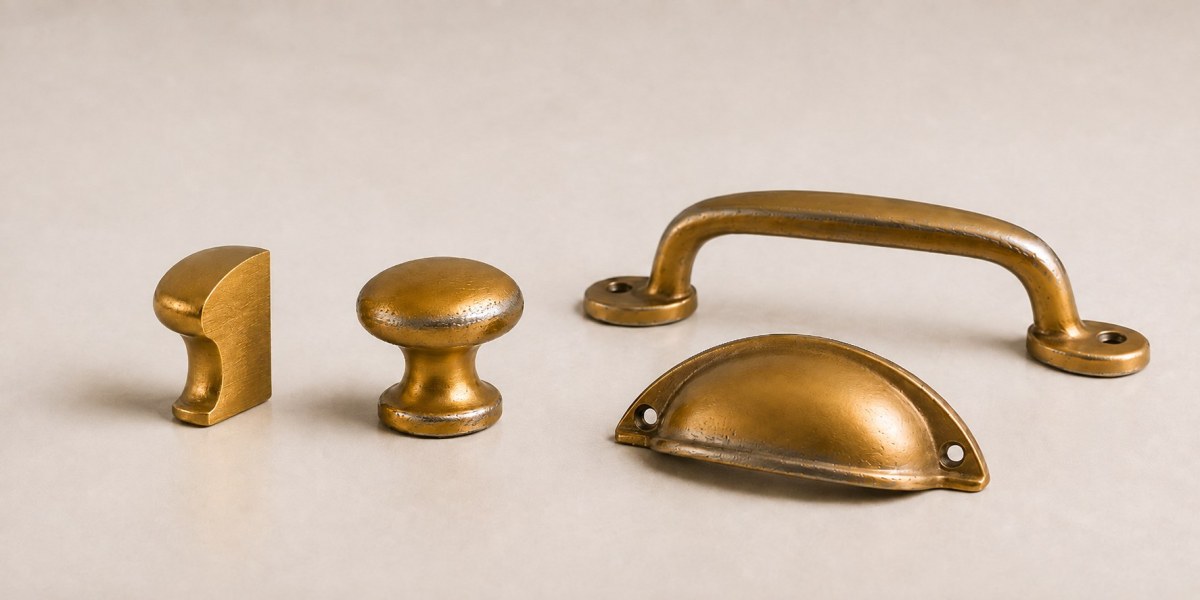
What "Solid Brass" and "Brass Plated" Actually Mean
Brass is an alloy of copper and zinc, typically around 60–70% copper. Solid brass hardware is cast or machined from this alloy as one homogeneous piece. The color, the weight, and the corrosion resistance go all the way to the core.
Conversely, brass-plated hardware starts as a cheaper base metal — usually zinc alloy, sometimes steel — and gets a thin electroplated layer of brass on the surface. That layer is measured in microns (thousandths of a millimeter). It looks identical to solid brass on day one. The difference shows up at month twelve.
What Listings Won't Tell You
The confusion in the market is often deliberate: online product listings routinely use ambiguous descriptors such as "brass finish," "brass tone," or "antique brass." These labels define only the visual finish, not the core structural material. If a listing doesn't explicitly state "solid brass," you should always assume it is a cheaper electroplated alternative.
The 5 Authenticity Tests
How to accurately distinguish genuine solid brass from thin surface plating at home.
The Weight Test
Density Verification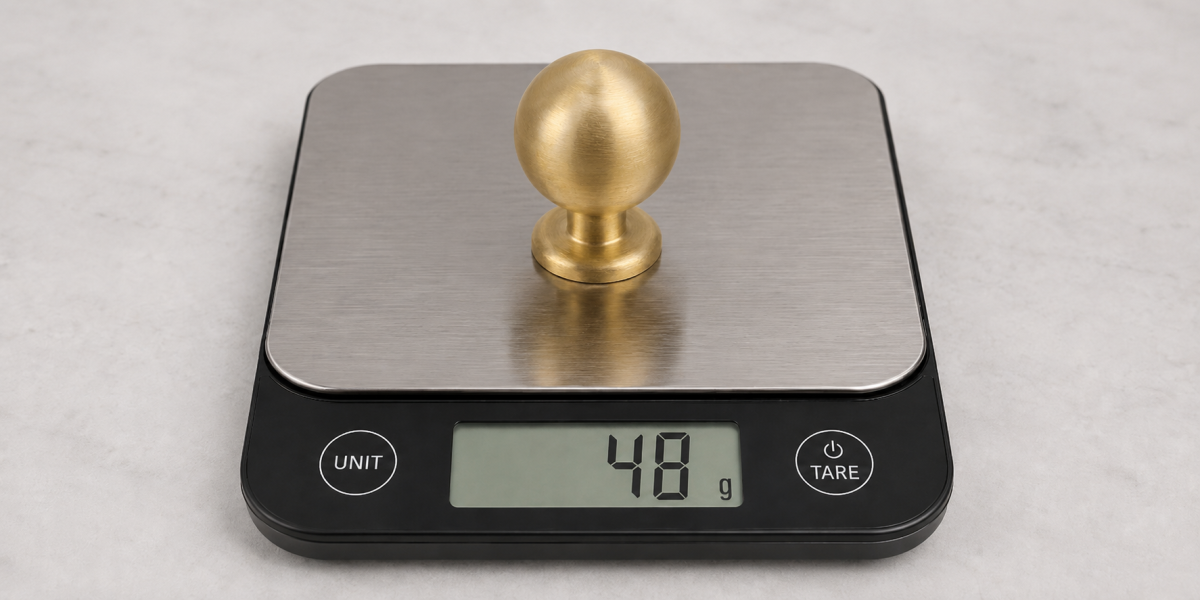
Brass is incredibly dense — about 8.5 g/cm³, compared to roughly 6.7 g/cm³ for zinc alloy. A genuine solid brass 1¼-inch cabinet knob weighs approximately 48 grams. By comparison, its cheaper zinc counterpart feels lighter and hollower, typically weighing 25–30% less.
The Sound Test
Acoustic ResonanceStrike the surface lightly with a fingernail or a small metal tool. Solid brass emits a bright, clear, musical ringing resonance that lingers briefly. Zinc alloy or hollow-cast elements return a dull, flat, short thud. Once you compare a solid piece to a plated piece side-by-side, the acoustic difference becomes unmistakable.
The Magnet Test
Limitations Apply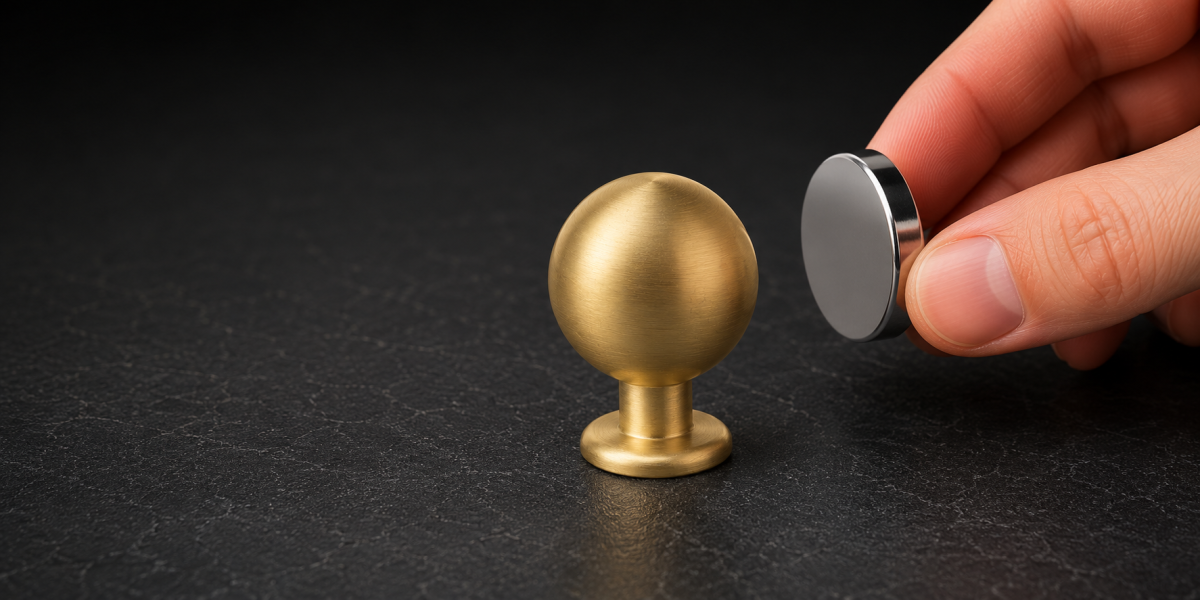
Pure brass is completely non-magnetic. If a magnet pulls or sticks firmly to your hardware, the piece has a core of plated steel.
Wear-Point Inspection
Microscopic Wear Analysis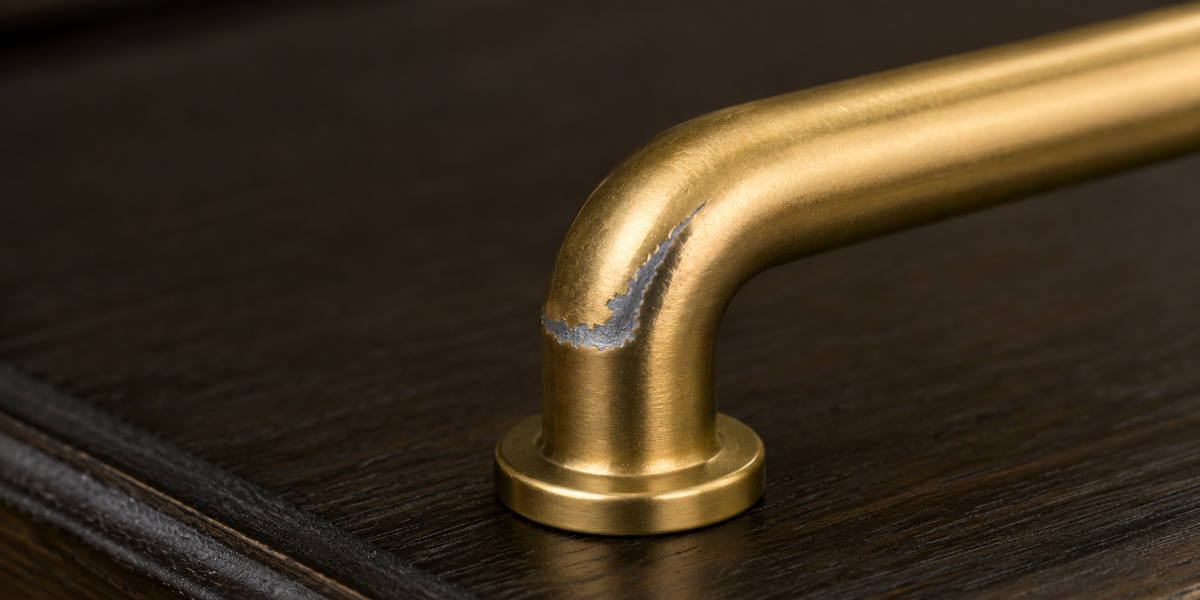
Examine existing hardware or floor samples at heavy contact areas — the edges of a pull or the underside of a cabinet handle. On electroplated components, fingers wear through the thin brass shell, exposing silver or gray zinc-core metals beneath.
Solid brass wears differently. Surface abrasion merely exposes brighter raw brass underneath. If unlacquered, the surface naturally tarnishes and develops a deep, rich, organic patina over time, which can easily be polished back to its original golden shine.
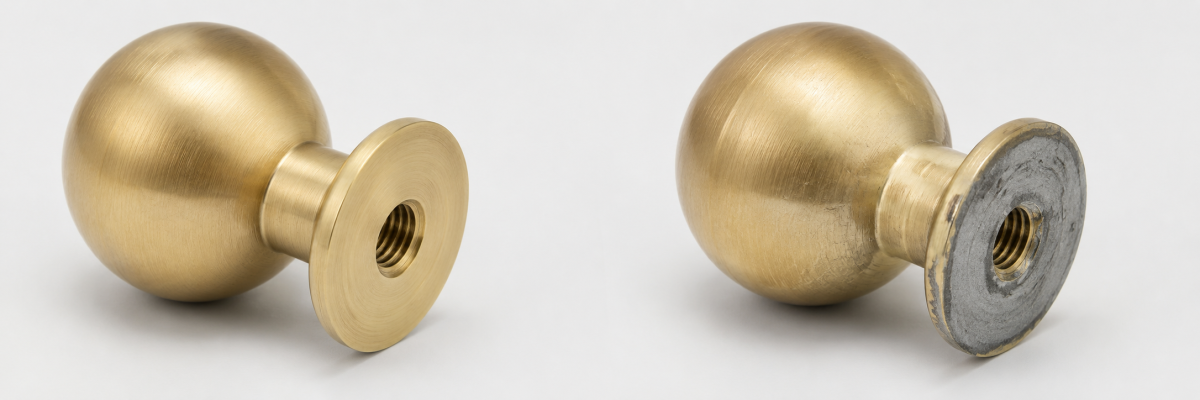
Expert Tip: Check hidden surfaces, such as screw threads or hollow recess backs. Manufacturers rarely electroplate non-visible zones cleanly. A raw, gray, rough, or unpolished backside tells you everything you need to know about its core quality.
The Price-Floor Test
Raw Material RealitiesHigh-quality copper and zinc are expensive raw metals, and solid brass requires precision machining. This introduces a natural retail price floor: a genuine, solid brass piece simply cannot be sold for $1 to $2.
Brass Authenticity Calculator
Have a piece of hardware in hand? Run through the 5 tests above, select its real physical characteristics below, and calculate its statistical likelihood of being genuine solid brass.
Authenticity Score
Side-by-Side Comparison
| Feature | Solid Brass | Brass Plated |
|---|---|---|
| Construction | One alloy throughout (Homogeneous) | Zinc/steel core + brass layer (microns thin) |
| Lifespan in Kitchen | Decades | 1–3 years before visible wear |
| Scratches Reveal | More brass | Grey base metal — damage is irreversible |
| Tactile Feel | Dense, substantial | Lightweight, sometimes cold or hollow |
| Corrosion Resistance | High; naturally resistant and antimicrobial | Fails rapidly once the thin outer plating is breached |
| Refinishing Potential | Yes, repeatedly (can tarnish & polish back) | No — replating costs more than replacing the unit |
| Typical Price/Knob | $3 – $45 | $1 – $4 |
| Best Application | Daily-touch hardware: kitchen, bath, doors | Low-touch, purely decorative spaces |
When Brass Plated Is Actually Fine
Honesty cuts both ways. Plated hardware is a reasonable, cost-effective choice for spaces that hands rarely touch: decorative frames, guest-room dresser drawer fronts that open twice a year, seasonal staging for house sales, or a strict, budget-conscious rental property refresh.
The primary physical wear mechanism is continuous contact. With no heavy skin oils, friction, or humidity to wear it down, a micron-thin brass layer can serve decorative purposes well.
The True Cost of Plated Pulls
But for kitchen cabinets, bathroom vanities, and main entry doors — high-use hardware that gets grabbed thousands of times a year, often with damp or oily hands — the life-cycle economics favor solid brass every single time.
Replacing a faded, worn, and flaking set of plated pulls (often twice) quickly exceeds the initial upfront cost of purchasing durable solid brass once.
One More Thing: Lead Content
Traditional brass alloys can contain trace amounts of lead added to improve machinery output. For hardware installed in heavy-contact food prep spaces, always verify that the manufacturer specifies lead-free alloys and complies fully with California Prop 65 safety regulations.
Most reputable manufacturers explicitly certify this on their product descriptions. Extended silence on the matter usually implies the metal remains untested.
All products in our QOGRISUN unlacquered brass collection are precisely machined from lead-free solid brass. We suggest verifying individual product details to confirm compliance with relevant standards.
FAQ
Is heavier hardware always solid brass?
No — while density is a highly reliable indicator, some plated pieces use heavy steel cores to artificially simulate quality weight. Perform the magnet and ring test together to verify.
Will solid brass rust?
No. Brass contains no iron, meaning it cannot rust. Raw unlacquered brass will slowly oxidize and darken, developing a natural golden-brown patina. This is a surface protectant, not decay, and can easily be polished back to its original bright finish.
How do I tell from an online listing alone?
Check for three solid signals: the explicit use of "solid brass" (never "brass finish"), an individual weight per item that aligns with solid brass density, and a unit price that realistically sits above the raw material floor.
Is "stainless steel with brass PVD coating" the same as brass plated?
It utilizes a different physical process (Physical Vapor Deposition), but the principle remains similar: a protective shell over a non-brass core. PVD coatings are exceptionally durable, but deep scratches will still expose gray steel beneath, and the surface will never develop a natural brass tarnish.
Details Designed to Live With
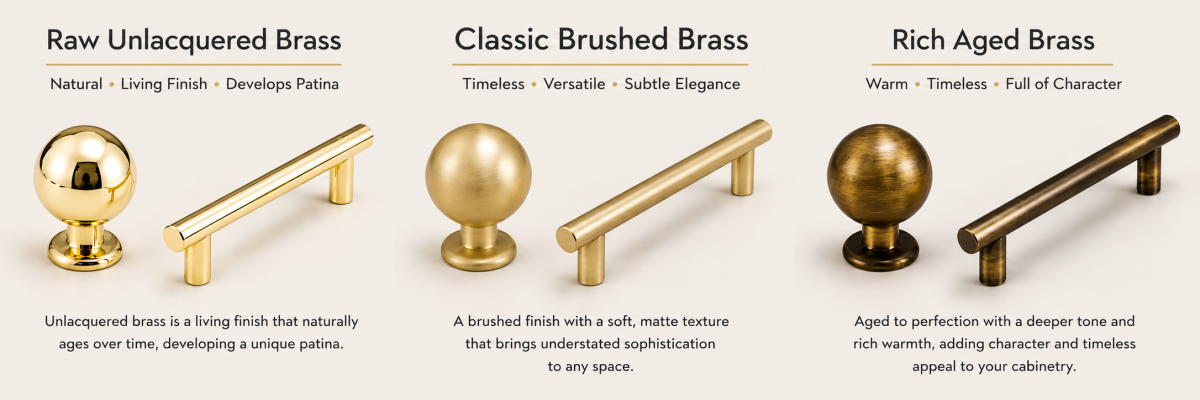
QOGRISUN crafts solid brass cabinet hardware — knobs, pulls, T-bars, and appliance pulls in unlacquered, brushed, and aged brass. Protect your design with authenticity.